This page explains what the ritual means, the traditional age, the customs and the timing basics, then shows you how to plan it locally. You'll also find common mistakes to avoid and answers to the questions parents ask most often.
What Is a Mundan Ceremony?
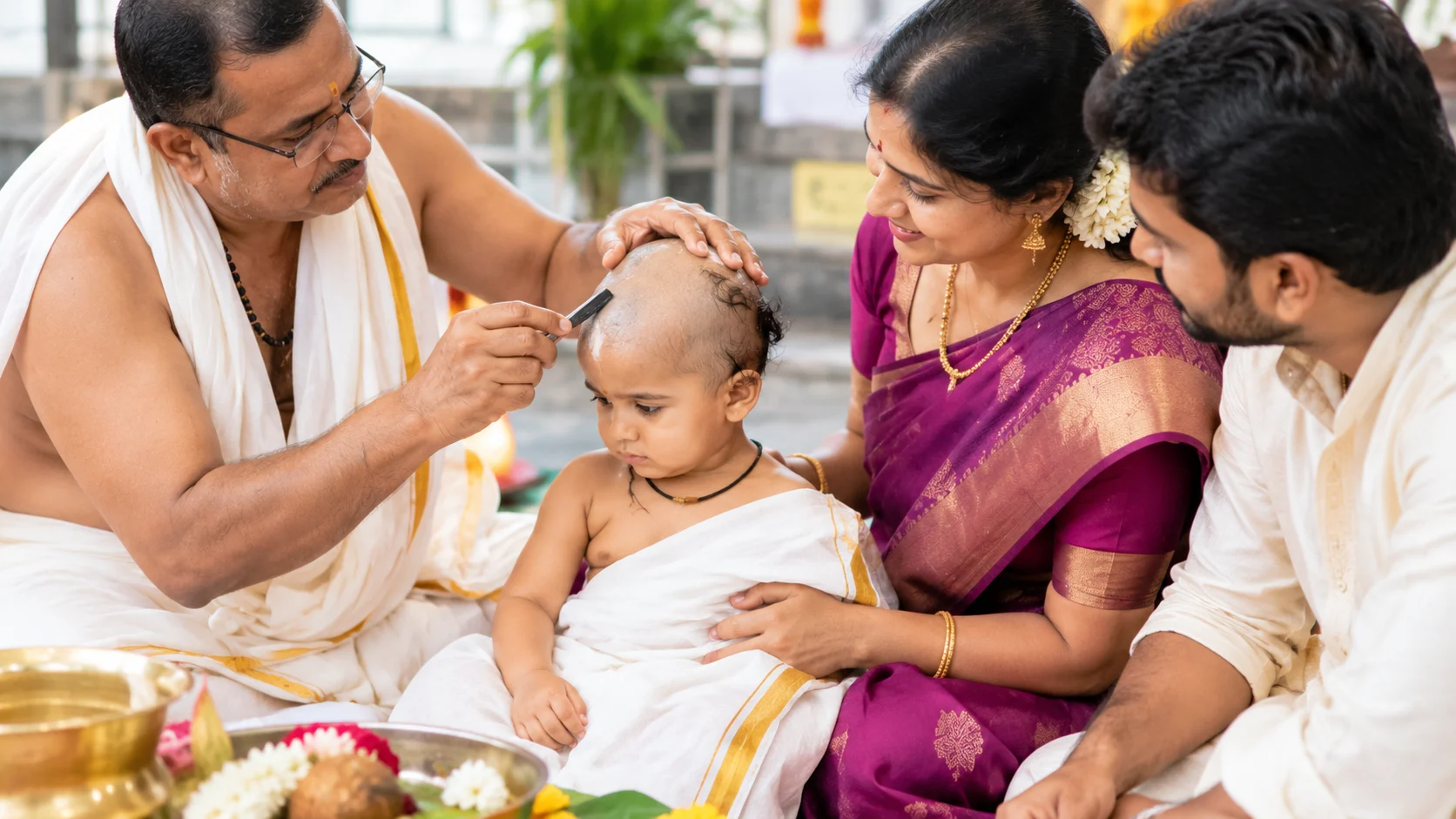
Mundan is the Hindu ritual of shaving a child's head for the first time. You'll also hear it called Chudakarana, Chudakarma or Chaula, depending on the region and the family. It is one of the sixteen sanskars, the life-cycle rites that mark a person's growth from before birth into adulthood. If you'd like the bigger picture, the page on Vedic Child – 16 Sanskars explains where mundan sits among them.
In traditional belief, the hair a baby is born with is connected to the time in the womb and to impressions from the past. Removing it is seen as purification and a fresh beginning, along with a prayer for good health, sharp intellect and a long life. That is a religious and cultural understanding, not a medical one, and it's worth holding it that way.
Why Families in Australia Still Perform Mundan
For families who grew up in India and now live in Australia, mundan is often a thread back to home. Grandparents may join by video call, cousins travel across the city, and a child born in Melbourne receives the same blessing their parents once did.
For many parents, it's the small moments that stay with them: the chanting, the turmeric, the first soft tuft of hair placed in a bowl. The ceremony also gives you a natural occasion to thank relatives and introduce your child to your community.
Right Age for Mundan: When Should It Be Done?
The mundan ceremony age is usually the first thing families ask, and the honest answer is that traditions differ. Most sources describe the rite as taking place in an odd year of the child's life, commonly the first or third, and sometimes the fifth or seventh. Some communities perform it within the first year, and others follow a local custom that fixes a particular month.
So the right age for mundan is really the age your family lineage follows, balanced against your child's comfort. A baby who's unwell, teething hard or unsettled after a long flight may do better with a slightly later date within the same auspicious window.
If the ceremony was missed, it can usually be done later. Many families choose an odd year such as five or seven. A pandit can adapt the ritual for an older child so it feels calm rather than frightening.
Girls are included in many families, while others perform a symbolic trim of a few strands instead of a full shave. Practice varies by region, so follow your own tradition.
Mundan Ceremony Rules Families Usually Follow
Rules differ between regions and family lineages (kul parampara), so treat the points below as common practice, not a universal checklist.
- Auspicious date and time: The date is chosen from the panchang, usually in an odd year of the child's life.
- Weekday preferences: Many panchangs favour Monday, Wednesday, Thursday and Friday, while some families avoid Tuesday and Saturday. Confirm with your pandit.
- Days to avoid: Eclipse days and certain lunar days are commonly avoided, as is Rahu Kaal on the day itself.
- Ganesh puja first: The ceremony opens by invoking Lord Ganesha, often followed by prayers to the Navagraha and the family deity.
- Fresh bath and clothes: The child is bathed and dressed in clean, comfortable clothes. Many families choose white or soft yellow.
- Who holds the child: Usually a parent or, in some families, the maternal uncle.
- The first cut: A ritual first snip is made with mantras before a barber or family member completes the shave.
- Hair offering: The hair is respectfully offered to flowing water, placed at the base of a tree or returned to soil.
- The shikha: Some families leave a small tuft of hair, others don't.
- Aftercare: Sandalwood or turmeric paste is traditionally applied to the scalp. Keep it gentle and watch for skin sensitivity.
How Muhurat Is Chosen for Mundan
In traditional Vedic astrology, timing is treated as part of the rite itself. An astrologer or pandit typically looks at the tithi (lunar day), nakshatra, weekday and rising sign at the proposed hour, and avoids inauspicious windows. Some texts also favour the period when the sun travels north, known as Uttarayan, though pandits differ on how strictly to apply that.
Astrologers may also check the child's birth chart so the chosen time doesn't clash with sensitive placements. This is interpretive practice, not a promise of any outcome, and no date is meant to cause worry.
One pattern I often see is families booking the venue first and the muhurat second, which forces an uncomfortable compromise. It's better to fix the window first.
There's also an Australian detail worth knowing. Muhurat timings depend on local sunrise and sunset, so a panchang written for India will give the wrong Rahu Kaal for Melbourne. Daylight saving in Victoria shifts the clock too, and our seasons run opposite to India's. Ask your pandit to calculate everything for Melbourne itself.
How the Mundan Ceremony Is Performed Step by Step
Details vary, but most ceremonies follow this general flow and take an hour or two.
- Preparation: A clean space is set up with a kalash, puja items, a seat for the pandit and a bowl or cloth for the hair.
- Sankalp and Ganesh puja: The family states its intention and invokes Lord Ganesha and the deities.
- Navagraha and havan: Offerings are made into the sacred fire with mantras for the child's wellbeing.
- The head shave: The child is held gently while the first strands are cut, then the barber completes the shave.
- Hair offering and bath: The hair is collected and offered, the child is bathed and paste is applied.
- Blessings: Aarti is performed, prasad is shared and elders bless the child, usually followed by a family meal.
Planning a Mundan Ceremony in Melbourne
Families here usually choose between three settings. A home ceremony is intimate and familiar, and suits babies who settle easily. A community hall or function room works for a larger guest list, though you should ask about rules on open flame. Some temples also host the ceremony, so check their booking process early.
At home, check smoke alarms and building rules if you plan a havan. Backyard ceremonies need a weather backup, because Melbourne can change in an hour. Our page on Hindu Priest for Home Ceremonies explains what a home ceremony involves.
If you're searching for a mundan ceremony pandit near me, look for someone who can explain the ritual in your family's language, calculate the muhurat for Melbourne and keep the day calm. Astro Shivang is based in Truganina and works with families across Melbourne, and also assists families in other Australian cities.
A few gentle practical steps help the day go well:
- Feed and rest the baby beforehand, and avoid clashing with nap time.
- Use a new, clean blade and speak to the barber in advance.
- Speak to your GP or child health nurse if your child has eczema or sensitive skin.
Common Mistakes and Misconceptions
- Choosing the date only for convenience. Weekends are easier for guests, but the muhurat should come first.
- Using an India panchang. Timings for Melbourne differ.
- Believing shaving makes hair thicker. Scientific evidence does not support this. Mundan is a religious rite, not a hair treatment.
- Overcrowding the room. A smaller circle keeps the baby calmer.
- Assuming one custom fits everyone. Your grandparents' version may differ from your in-laws', so agree on the details early.
- Ignoring the child's mood. A short pause is fine. A settled baby makes for a better ceremony.
When a Pandit's Guidance Helps
You can do simple rituals yourself, but many parents prefer a pandit for the correct mantras, sequence and timing. A Hindu Pandit in Melbourne can also help you adapt customs to a busy modern home without losing their meaning.
At Astro Shivang, the focus is on explaining each step so you understand what you're doing, not just following instructions. In my experience, families who share their customs and questions early end up with a smoother, calmer ceremony.
Before you speak to a pandit, it helps to have ready:
- Your child's date, time and place of birth
- Your family gotra and kuldevta, if you know them
- Preferred date ranges and expected guest numbers
- Any family customs you'd like to include
Good questions to ask include how long the ceremony takes, what you need to arrange and who should hold the child.
Ready to Plan Your Child's First Haircut Ceremony?
A mundan ceremony doesn't need to feel complicated. Choose an age your tradition supports, respect your family's customs, have the timing calculated for Melbourne and keep the day gentle for your little one.
If you'd like to talk it through, Astro Shivang is happy to help you understand the rites, choose a suitable date and plan the ceremony. You can reach us on +61 433 710 113 whenever you're ready.